

As India’s economic landscape expands, private aviation has transitioned from an exclusive luxury to a critical business tool. For corporate leaders, high-net-worth individuals, and time-sensitive missions, chartering a private jet offers unparalleled flexibility, privacy, and efficiency. However, navigating the cost structures of private aviation requires a clear understanding of several operational variables.
The Baseline: Hourly Charter Rates
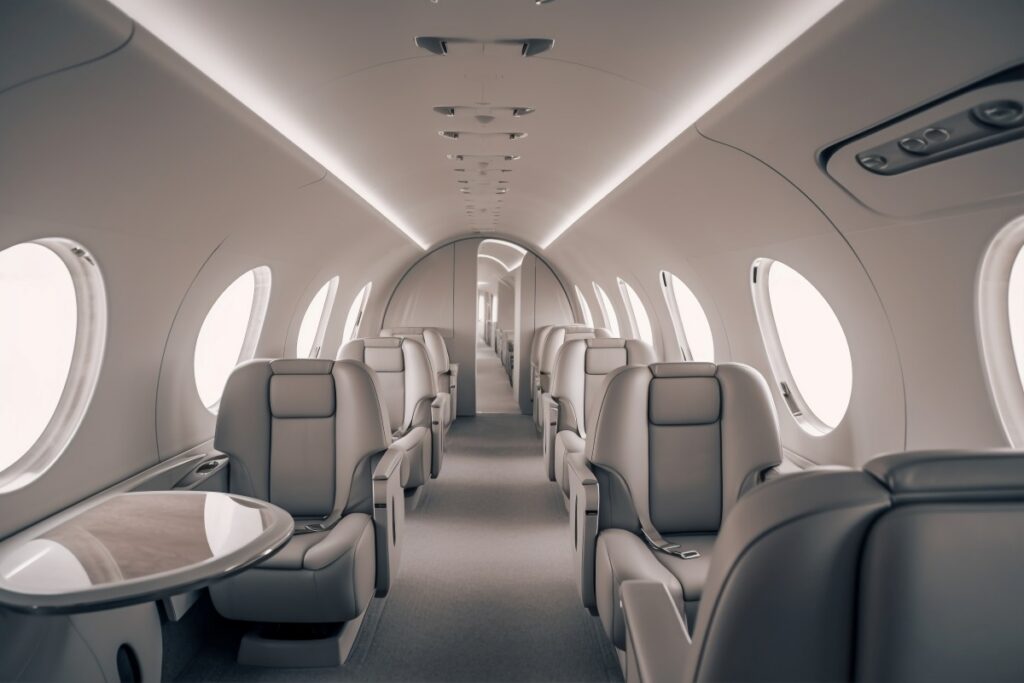
In India, private jet charters are primarily priced on an hourly basis. This hourly rate covers the aircraft’s operation, fuel, flight crew, and basic maintenance provisions. The final financial commitment heavily depends on the size, range, and category of the aircraft selected:
- Turboprops (e.g., Beechcraft King Air B200): Seating 5 to 7 passengers, these aircraft are ideal for short regional hops or landing on shorter runways. The estimated hourly rate ranges from ₹90,000 to ₹1,40,000.
- Light Jets (e.g., Embraer Phenom 100, Cessna Citation CJ2): Perfect for 4 to 6 passengers on quick domestic business trips, offering higher speeds than turboprops. Rates average ₹1,50,000 to ₹2,20,000 per hour.
- Mid-Size Jets (e.g., Hawker 800XP, Cessna Citation XLS): Offering a stand-up cabin and space for 8 to 9 passengers, these jets provide excellent comfort for longer trans-continental flights. Rates range from ₹2,50,000 to ₹3,50,000 per hour.
- Heavy / Large Jets (e.g., Bombardier Global 5000, Dassault Falcon 2000): Designed for maximum range, ultra-luxury, and accommodating 10 to 14 passengers. These are suited for international travel or large corporate groups, costing between ₹4,50,000 and ₹6,50,000 per hour.
Understanding the Total Cost Model
The total financial outlay for a chartered flight is rarely a simple calculation of hourly rate multiplied by flight duration. The comprehensive pricing structure is governed by the relation:
$$\text{Total Cost} = (\text{Hourly Rate} \times \text{Block Hours}) + C_{\text{Ancillary}}$$
Where $C_{\text{Ancillary}}$ represents the sum of essential operational variables that are factored into the final invoice. These variables include:
- Airport Landing and Parking Fees: Major metropolitan airports such as Indira Gandhi International Airport (DEL) in Delhi and Chhatrapati Shivaji Maharaj International Airport (BOM) in Mumbai impose premium tariffs for landing slots and overnight parking compared to tier-2 or tier-3 regional airfields.
- Crew Accommodation: If an itinerary demands an overnight stay or an extended wait time at the destination, the charterer is responsible for funding the premium lodging, transport, and daily allowances of the flight crew (minimum two pilots and a cabin attendant for larger aircraft).
- Ground Handling and VIP Terminal Charges: Private jet passengers utilize fixed-base operators (FBOs) and exclusive General Aviation Terminals (GAT) to bypass commercial lines. Access to these luxury lounges and fast-tracked security incurs explicit handling fees from airport operators.
- Statutory Taxes: In India, all domestic air charter services attract a standard Goods and Services Tax (GST) of 18%, which significantly influences the net expenditure.
Operational Insight: “Empty Leg” flights present a unique opportunity for cost optimization. When an aircraft flies empty to reposition for its next chartered assignment or return to its home base, operators frequently offer these repositioning legs at discounts ranging from 40% to 70% off standard hourly tariffs.
Strategic Planning for Corporate Charters
To optimize expenditure, corporate travel desks must align their logistical mandates with the appropriate aircraft class. Utilizing a heavy jet for a short, domestic sector like Mumbai to Pune is economically inefficient, just as utilizing a light jet for a multi-city pan-India tour with a large executive board compromises productivity. By understanding these cost metrics, organizations can make data-driven decisions that balance financial prudence with premium operational efficiency.