
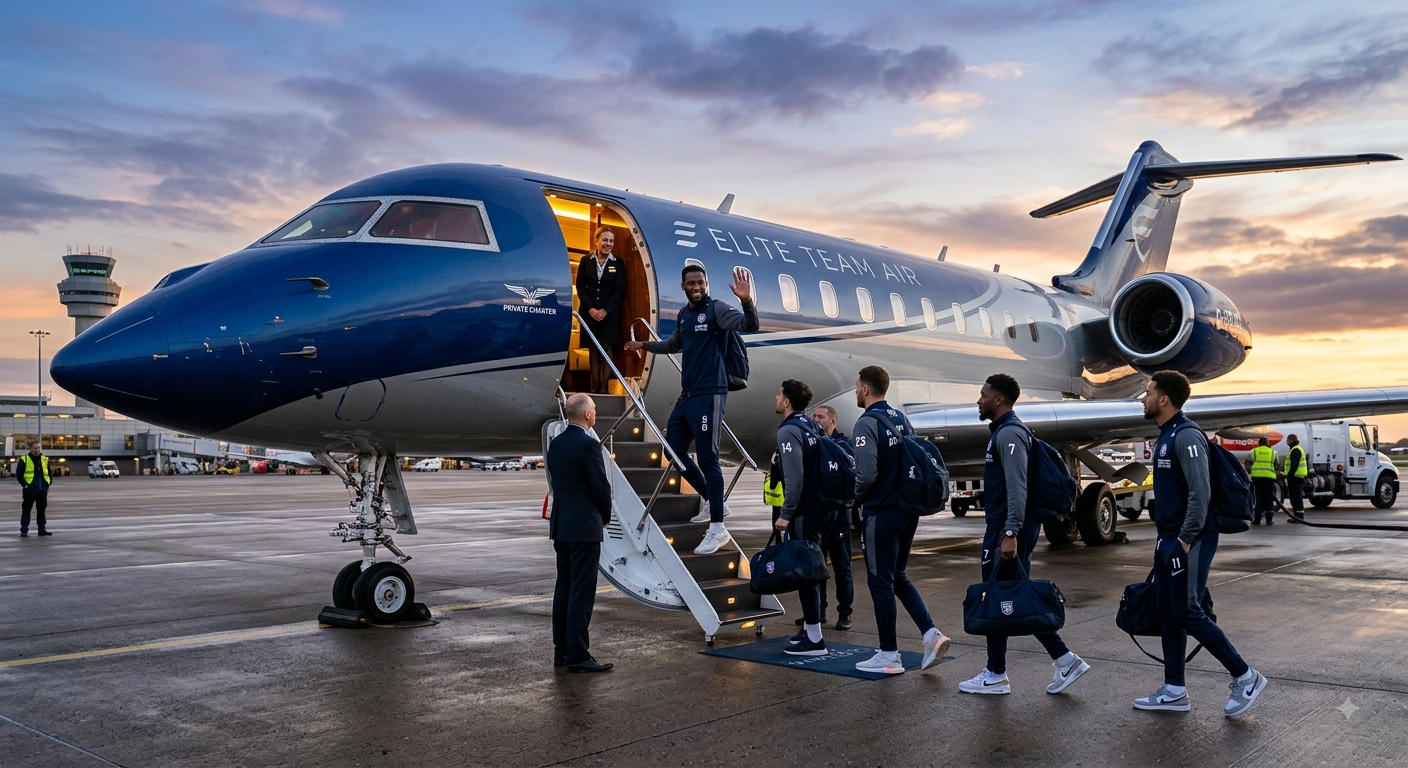
When people see a professional athlete or sports franchise board a private jet, the immediate assumption is often pure indulgence. It looks like the ultimate status symbol—champagne in hand, leather reclining chairs, and non-existent airport lines.
However, in modern elite sports, private aviation has shifted from a status perk to a critical business strategy. When multi-million-dollar contracts, championship trophies, and player longevity are on the line, private aviation is not an expense—it is a high-yield investment in athletic performance.
1. Preserving the Body: Physical Recovery at 30,000 Feet
For an athlete whose body is their primary asset, commercial air travel is a physical nightmare:
- Legroom and Joint Health: A 6’8″ basketball player cramped in a standard airline seat risks joint stiffness, poor circulation, and increased muscle tightness. Customized private aircraft offer lie-flat beds and expansive space to stretch.
- In-Flight Physical Therapy: Modern private charters allow athletic trainers to conduct treatment in-flight—using compression boots, electrostimulation, and massage therapy immediately after a game.
- Optimized Cabin Environments: Advanced private jets allow precise control over cabin pressure, altitude simulation, and humidity, mitigating dehydration and the physical toll of altitude changes.
2. Managing Fatigue and Jet Lag
In leagues like the NBA, NHL, or European football, teams face grueling schedules with back-to-back games in different time zones. Commercial flight delays, layovers, and rigid scheduling can destroy a player’s recovery window.
- Tailored Departure Times: Teams can fly immediately after a game, maximizing sleep cycles rather than waiting for early morning commercial flights.
- Circadian Rhythm Optimization: Custom cabin lighting systems mimic natural daylight or nighttime to help athletes adjust quickly across time zones, minimizing jet lag.
3. Confidentiality, Focus, and Mental Prep
Elite performance requires deep mental focus. Navigating public terminals, security lines, and fan interactions right before or after a high-stakes game drains precious mental energy.
- Zero Terminal Friction: Direct tarmac access allows teams to drive directly to the aircraft, skipping public airport stress.
- In-Transit Strategy: A private cabin doubles as a secure, mobile war room where coaches can conduct film sessions, review playbooks, and discuss tactics without privacy risks.
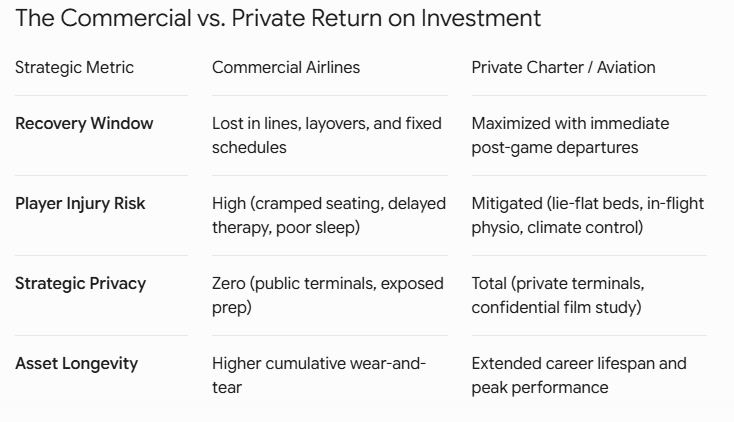
The Bottom Line: Protecting the Franchise’s Biggest Assets
When sports franchises commit tens or hundreds of millions to player contracts, spending a small fraction of that capital on optimized transportation is risk management. Reducing injury risk by even 5% or gaining a fractional edge in late-game endurance can be the difference between a playoff run and an early exit.
Ultimately, private aviation isn’t about flying in style—it’s about landing ready to win.